
Gu Yu: The last solar term of spring, why is it the best time to nourish the spleen?
Guyu: The last solar term of spring, why is it the best time to nourish the spleen?
The spleen is the root of the earth, governing the central organs. It is often treated for four periods of time with four organs, each lasting eighteen days. "- Su Wen, Taiyin Yangming Lun
Guyu is the last solar term of spring. The Grain Rain of 2026 will occur on April 20th.
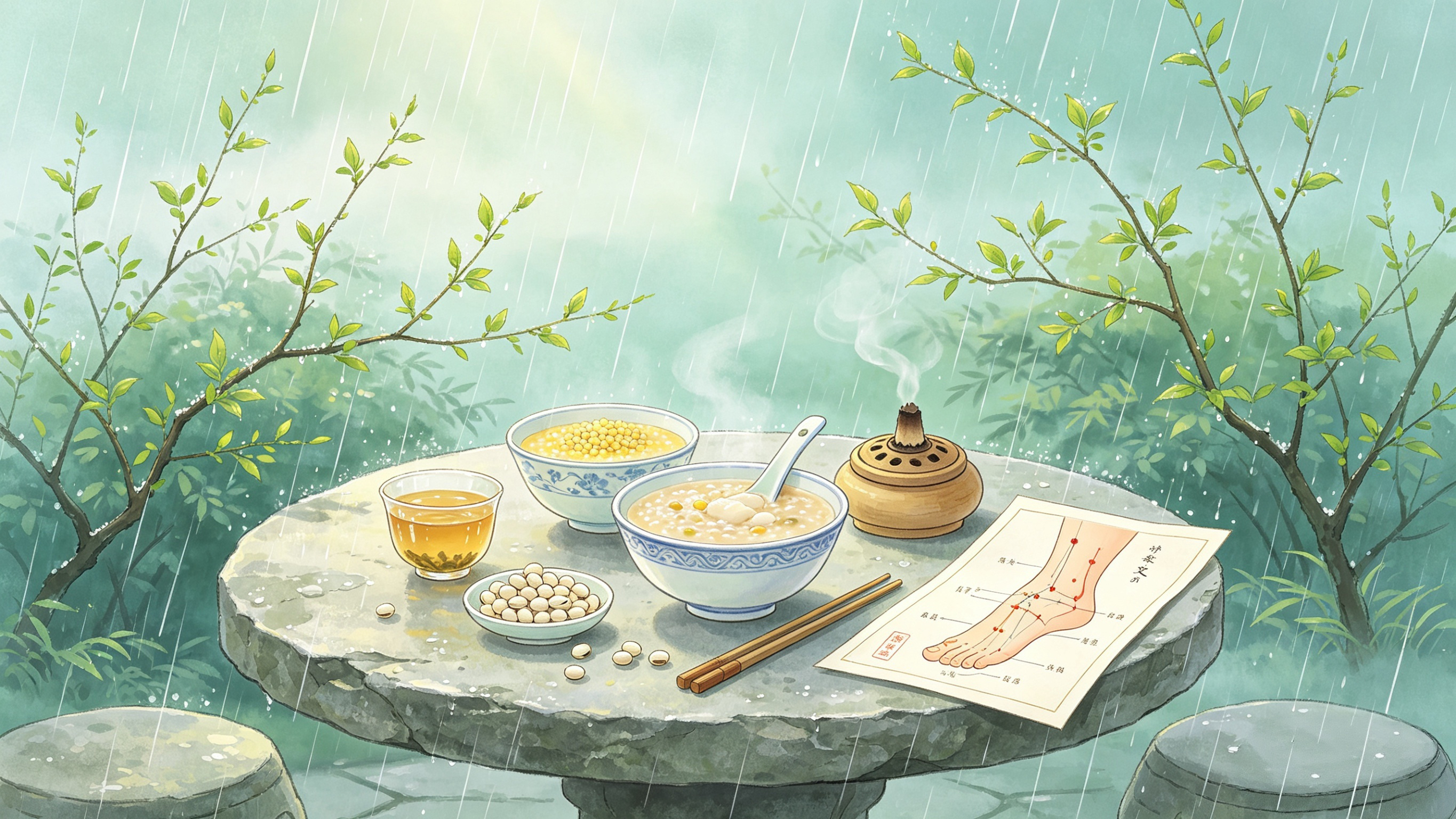 The ancients said, "Rain produces a hundred grains" - at this time, as the temperature rises and the amount of rain increases, the seedlings and new crops in the fields need the nourishment of rain the most. In the small world of the human body, Gu Yu is also a key "turning point": from "nourishing the liver" in spring to laying the foundation for "nourishing the heart" in summer, and the bridge in between is nourishing the spleen.
Why do we need to nourish the spleen in late spring? What is the logic of the Five Elements? How to strengthen the spleen and dispel dampness during the Grain Rain season? Today, we will use an article titled 'Five Elements · Yisheng' to explain these principles thoroughly.
1、 During the Grain Rain season, the qi of heaven and earth shifts from "wood" to "earth"
In the Five Elements theory, spring belongs to wood, summer belongs to fire, and long summer (the transition between summer and autumn) belongs to earth. What many people don't know is that the last eighteen days of each season are under the control of 'earth'.
The Yellow Emperor's Inner Canon clearly states: "The spleen is the earth, governing the central region. It is often used to treat the four organs for four periods of time, each lasting eighteen days." This means that although the spleen (earth) corresponds to the long summer, it will be on duty for the last eighteen days of each season, presiding over the conversion and transition of energy.
The Grain Rain solar term lasts for fifteen days, coinciding with the last eighteen days of spring when the soil is in full bloom. It is the golden window period for regulating one's temperament and nourishing the spleen and stomach. In other words, Guyu is the "shifting period" from spring to summer, and the key to shifting is the soil.
-Spring is dominated by "wood" - the liver qi is generated, and all things move upwards
-Summer is dominated by 'fire' - the heart is strong and passionate, spreading outwards
-From wood to fire, "soil" is needed in between to receive and transform - wood generates fire, but it must be mixed with soil to prevent excessive fire
So, the core of Gu Yu's health preservation is not to continue vigorously nourishing the liver, but to smoothly switch from "nourishing the liver" to "nourishing the spleen", laying a solid foundation for summer.
2、 Why is it easy to have spleen deficiency and heavy dampness in late spring? The logic of Mu Ke Tu
There is a key rule in the mutual restraint of the Five Elements: wood restrains soil.
The liver belongs to wood, and the spleen belongs to soil. In spring, the wood qi is strongest, and excessive liver qi can easily "restrain" the spleen and soil, leading to the inhibition of the spleen's transport and transformation function. This is also the root cause of many people's loss of appetite, bloating, and fatigue in spring - it's not a problem with the liver, but rather the spleen being "suppressed" too much.
At Grain Rain, the wood qi of spring begins to converge, but the spleen soil has not fully recovered yet. Unfortunately, at this time, there is an increase in rainfall and moisture, which is most likely to trap the spleen. The spleen is already weak, and when it is surrounded by external dampness, typical spleen deficiency and excessive dampness will occur:
-The body is heavy, like wrapped in a wet towel
-Thick and greasy tongue coating, with tooth marks on the edges
-Stool sticking to toilet bowl, not forming properly
-Oil on the face and repeated acne
-Feeling drowsy in the afternoon, the more I sleep, the more tired I become
So the first priority of Gu Yu's health preservation is to strengthen the spleen and eliminate dampness - to lift the function of the spleen and allow the body's dampness to be expelled.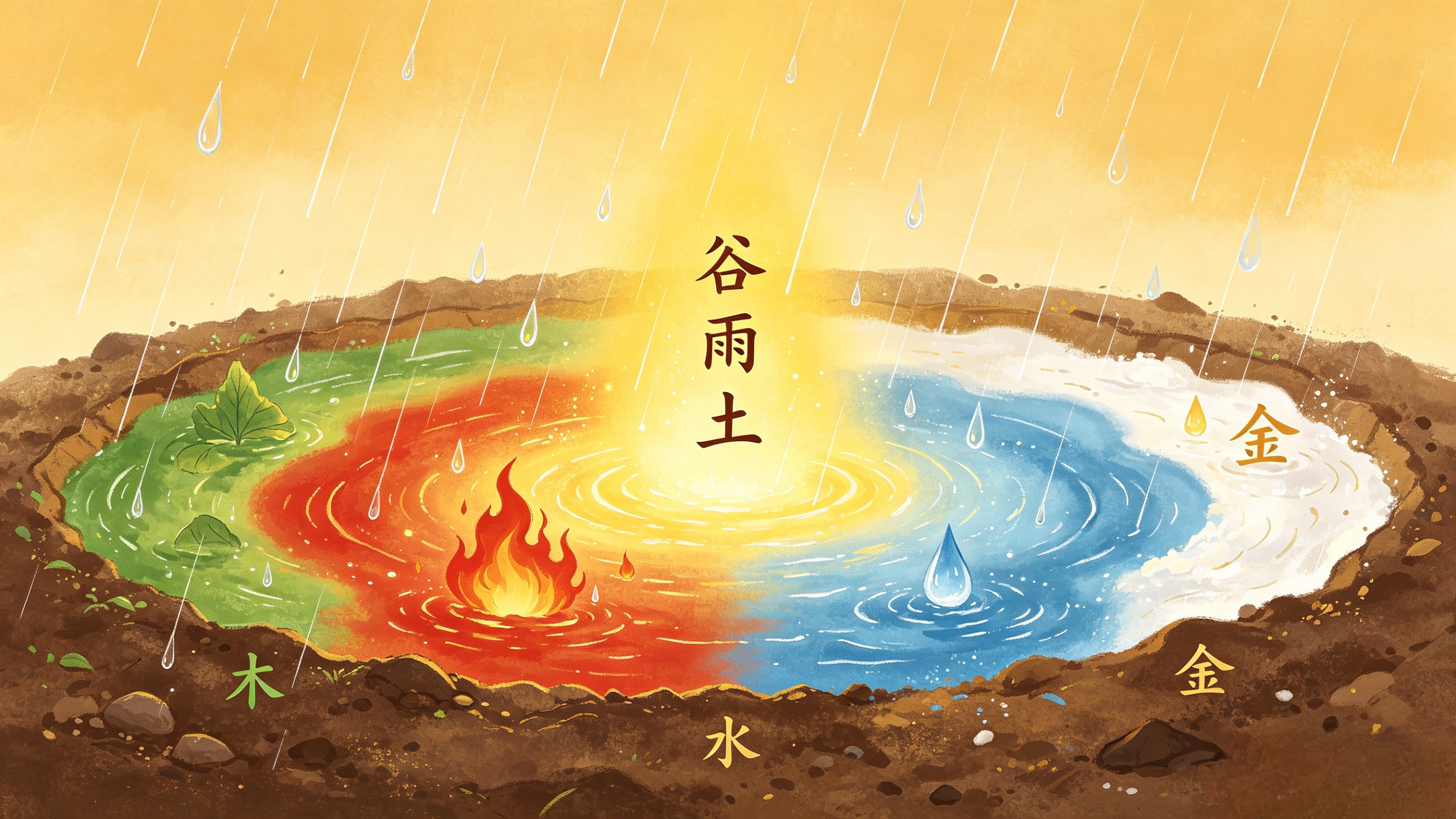 3、 Strengthening the spleen and dispelling dampness, do these five things well during the Grain Rain season
🍵 1、 Diet: Eat "sweet and light" foods and avoid "raw, cold, sticky and greasy" foods
Traditional Chinese Medicine teaches that the spleen likes dryness and dislikes dampness. The diet of Guyu follows three principles:
① Eat more sweet and flavorful foods that enter the spleen
Yam, red dates, millet, pumpkin, sweet potatoes, white lentils, and a bowl of millet yam Congee in the morning is an excellent spleen strengthening breakfast.
② Properly match with moisture removing ingredients
Red beans, stir fried Job's tears, Poria cocos, Euryale, winter melon, crucian carp, the classic "Four Divine Soup" (Poria cocos, yam, lotus seeds, Euryale cocos) is very suitable for drinking at this time.
③ Eat less dampness generating and moisturizing substances
-Cold and raw: Ice drinks, salads, and sashimi can easily damage spleen yang
-Sticky: glutinous rice, milk tea, desserts, easy to promote dampness and phlegm production
-Greasy: deep fried, fatty and sweet, easy to hinder stomach dampness
Guyu Dampening Tea
10g of Poria cocos, 5g of dried tangerine peel, 15g of stir fried Job's tears, and 2 slices of ginger. Boil in water for 15 minutes as a substitute for tea. Drink continuously for a week, and your body will become noticeably lighter.
🚶♂️ 2、 Exercise: Slightly sweat, eliminate dampness without damaging fluids
Movement generates yang, and yang can transform dampness.
Recommend brisk walking, eight dan brocade, yoga, and slow jogging. It is advisable to keep the body slightly hot and sweat slightly on the forehead. It is not recommended to sweat profusely - at the end of spring, the yang energy is still rising, and sweating excessively can deplete energy and damage fluids, which can actually worsen dampness.
If it is inconvenient to go out on rainy days, you can massage your abdomen clockwise (with the navel as the center) at home for 5 minutes in the morning and 5 minutes in the evening, directly promoting the circulation of the spleen and stomach.
💤 3、 Daily routine: stay up late and wake up early, but don't be too cold
Guyu has long days and short nights. You can stay up late (no later than 11 o'clock) and wake up early (6-7 o'clock), and also pay attention to:
-Don't rush to turn on the air conditioning, there is a large temperature difference between morning and evening, and being too cold can easily lead to dampness entering the body
-Regularly sun dry bedding to reduce moisture invasion
-Close the windows in a timely manner on rainy days to avoid getting wet outside and entering the room
😊 4、 Emotions: Think less and get closer to nature
The spleen is in the process of thinking, and overthinking is the most harmful to the spleen. This is also the reason why people who overthink are prone to bloating and unable to eat.
Grain rain and spring scenery are still flourishing. Go outdoors for walks and outings, and see more plants and trees, which can soothe the liver and delight the spleen. Try to minimize sitting for long periods of time, scrolling through your phone, and worrying about things, so that your mind can relax and your spleen can be calm.
📍 5、 Acupoints: Press two "spleen strengthening and dampness dispelling acupoints" every day
-Zusanli (four horizontal fingers below the concave outer knee): the first important acupoint for the spleen and stomach, massage for 3 minutes a day, preferably with sourness and bloating
-Yin Ling Quan (inner side of calf, posterior edge of tibia): It is a key acupoint for dispelling dampness. The pain is obvious when first pressed, and sticking to it will gradually relieve it
It is recommended to press Zusanli in the morning and Yinling Spring before going to bed, and persist until the end of the valley rain. The changes in physical sensation will be very obvious.