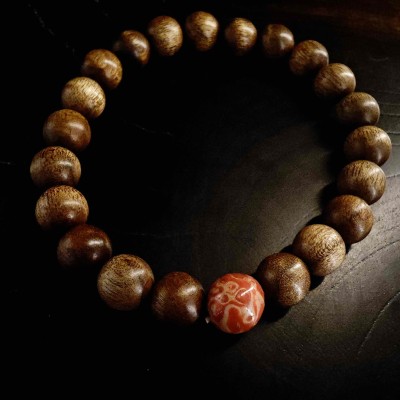
Gold Surges to Extreme, Yet Harm Is Inevitable
A Five-Element Analysis of the 2026 Major Bull Market in Gold
“Metal means conforming and reforming.”
— The Book of Documents · Hong Fan
Among the Five Elements, Metal resides in the west, belongs to lesser Yin, and is characterized by restraint, firmness and strength. It is nourished by Earth, restrained by Fire, symbolizes wealth, yet can also turn against its holder and damage fortune.
In 2026, the international gold market is undergoing a profound upheaval marked by excessively dominant Metal energy. At the start of the year, gold prices surged to a record high near $5,600 per ounce, with a year-to-date gain of over 17% at one point. Entering February and March, sharp divergence between bulls and bears emerged, triggering a violent correction. Gold briefly fell below $4,100, plunging more than 22% from its early-year peak and entering a technical bear market in a rare roller-coaster pattern. Beneath this volatility lies a deep-seated Five-Element logic: overwhelming Metal energy has disrupted the balance of the Five Elements.
Today, we use Yin-Yang and the Five Elements to unpack the heavenly, earthly and human forces behind gold prices.
I. What Is Metal? The Five-Element Identity of Gold
In the Five Elements theory, gold belongs to the Metal element. Yet Metal signifies far more than gold, silver or jewelry; it encompasses all substances and energies marked by descending, contracting, rigid or cutting properties.
The essence of “Metal means conforming and reforming” rests on three pillars:
- Conforming: adaptability and formlessness. As a “supra-sovereign currency,” gold is not backed by any single nation’s credit and naturally possesses cross-border liquidity.
- Reforming: transformation and revolution. Gold’s value stems from its role as a revolutionary alternative to fiat currency systems.
- Austerity: the austere nature of Metal manifests as a hedge against inflation and a safe haven from risk.
Thus, when analyzing gold prices through the Five Elements, we must look beyond supply and demand to the balance of interactions between Metal, Earth, Fire and Water.
II. “Earth Fails to Nourish Metal”: Why Central Bank Buying Has Not Boosted Prices
Among the Five Elements, Earth generates Metal. In the global economic system, what represents Earth?
It is manufacturing foundations, the real economy, sovereign credit—and most importantly, central bank gold reserves.
In 2025, global central banks purchased a net 863 tons of gold. Although down from the peak of over 1,000 tons for three consecutive years, this figure remains far above the annual average of 473 tons from 2010 to 2021. In 2026, central banks continued net buying, with a total of 215 tons in the first quarter. The People’s Bank of China increased holdings for the 16th straight month, the Czech National Bank for 36 consecutive months, and Poland’s central bank also kept adding to its reserves.
Per Five-Element principles, Earth generates Metal: heavy central bank buying should push gold prices steadily higher. Yet the opposite occurred. From February to March 2026, prices corrected sharply, falling from above $5,400 to below $4,100.
Why did the “Earth generates Metal” dynamic fail?
Because “Earth” here refers not merely to gold-purchasing demand, but to the soundness of the global real economy.
As U.S. manufacturing accounts for less than 8% of non-farm employment—a record low—and countries such as Turkey and Russia were forced to reduce gold holdings temporarily amid fiscal pressure, Earth energy has weakened. Weak Earth lacks the strength to nourish Metal. While central bank purchases provide long-term support, a shaky real economy and eroding sovereign credit mean buying alone cannot sustain a continuous rally.
A CITIC Securities report clarifies this logic: central bank gold purchases act as a long-term force lifting the gold price floor, serving more as a “backstop.” Real interest rates and other variables exert a more decisive impact. In short, Earth can generate Metal, but feeble Earth cannot nourish it sufficiently.
III. “Fire Fails to Restrain Metal”: Why the U.S. Dollar Cannot Suppress Gold
In the Five Elements cycle, Fire overcomes Metal. In today’s international monetary system, what represents Fire?
It is the U.S. dollar, interest rates, and inflation expectations.
Fire melts Metal; a strong dollar and high interest rates should theoretically weigh on gold. Historically, the U.S. Dollar Index and gold have shown a significant medium-term negative correlation: between 2010 and 2026, their 60-day rolling correlation was negative 78.5% of the time.
The anomaly of 2026 is that this “Fire overcomes Metal” relationship has unraveled.
On one hand, at the start of 2026, markets priced in strong expectations of Federal Reserve monetary easing, forecasting two to three rate cuts within the year. Dovish expectations lowered the U.S. dollar real interest rate, reducing the opportunity cost of holding non-yielding gold and attracting massive capital inflows. On the other hand, escalating geopolitical conflicts in the Middle East created a standoff between Iran, Israel and the U.S., fueling persistent global risk aversion. Geopolitical tension has become the top risk for global central banks: among 99 surveyed institutions, 69.7% ranked it as their primary concern.
Yet the Fire-Metal restraint is not one-way. Excessively intense Fire causes Metal to melt, further amplifying gold’s safe-haven appeal. In March 2026, the Fed delivered a surprisingly hawkish message, keeping its benchmark rate unchanged and cutting projected 2026 rate cuts from 2–3 to just one, delaying easing until September or later. This meant Fire (dollar interest rates) grew stronger, not weaker. Yet gold was not fully suppressed, because overheated Fire erodes trust in the Fire itself, driving markets toward Metal as a safe haven—a profound paradox in the Fire-overcomes-Metal dynamic.
IV. “Excess Metal Brings Harm”: The Perils of Imbalance Behind the Gold Rally
The Dao of the Five Elements lies in balance. An overabundance of any single element disrupts the entire system.
The 2026 gold market is a classic case of “excess Metal brings harm”.
- Excess Metal weakens Wood
Metal conquers Wood. When gold rises too quickly and excessively, capital is siphoned away from global risky assets, suppressing Wood—the real economy, industrial development and consumer vitality. Meanwhile, the rapid rally built massive profit-taking positions. Institutional investors closed positions in bulk at high levels, triggering stampede-like selling that ultimately backfired on gold itself.
- Excess Metal drains Water
Metal generates Water. Overexpansion of Metal consumes Water—global liquidity and capital dynamism—reducing market depth, raising transaction costs and worsening volatility. The sharp gold selloff in February–March directly reflects liquidity exhaustion and capital flight, a true manifestation of excess Metal draining Water.
Thus, while gold’s long-term bullish structure remains intact, short-term pain is unavoidable. As institutions note: the gold market will likely see short-to-medium term range-bound consolidation at low levels, with a strong long-term trend, stretching out its upward cycle.
V. Balancing the Five Elements: A Deeper View of Gold’s Future
From a holistic Five-Element perspective, gold’s long-term investment case remains solid, yet several relationships demand renewed scrutiny:
First, the weakening of U.S. dollar credit has diminished Fire’s power to restrain Metal.
Confidence in U.S. Treasuries among central banks has fallen sharply: only 32.9% expect Treasuries to outperform G7 and Chinese bonds, down from 54.3% in 2025. Although the dollar remains a reserve currency, its dominance has faded. Systematically, Fire’s ability to restrain Metal is declining.
Second, ongoing geopolitical conflicts transform “Earth fails to nourish Metal” into “Earth supports Metal”.
The Middle East conflict has evolved from a short-term event into a macro turning point disrupting global energy supply chains and inflation expectations. Amid this shift, the logic underpinning the global monetary system is rapidly restructuring. Gold’s value as a supra-sovereign alternative is being re-priced. In the short run, gold may remain volatile and under pressure; in the long run, its core drivers—global economic restructuring, monetary policy, geopolitics and dollar strength—remain unchanged.
Third, “Metal generates Water” points the way forward.
Gold’s ultimate value lies not in its price, but in the Water it generates: the redistribution of global liquidity, diversified asset allocation, and the redefinition of national financial sovereignty. As more emerging markets adopt gold as a strategic diversification tool and African central banks join the buying spree, this “Metal generates Water” chain is taking shape.
Gold’s break to record highs appears to be a financial numbers game, yet it reflects an inevitable imbalance in the Five Elements.
Metal dominates unchecked, un-nourished by Earth, unrestrained by Fire—and in the end, Metal harms itself.
In the short term, gold will face continued volatility and pain, with extreme risks for retail investors chasing highs. In the long term, amid weakening dollar credit and the restructuring of the global monetary system, gold remains an irreplaceable allocation choice.
For investors, the lesson of the Five Elements is clear:
Follow the trend, avoid chasing peaks, and reject panic.
When gold overheats, wait for the return of Fire restraining Metal; when it oversells, seize the support of Earth generating Metal.
Only within balance can true opportunity be found.
May you navigate gold’s roller-coaster market without being blinded by Metal or trapped by Fire, perceiving the constant order of heaven and earth through the Dao of the Five Elements.
This article offers interpretation from the perspective of traditional culture only and does not constitute investment advice of any kind.
Market risks exist, and investment requires caution.